
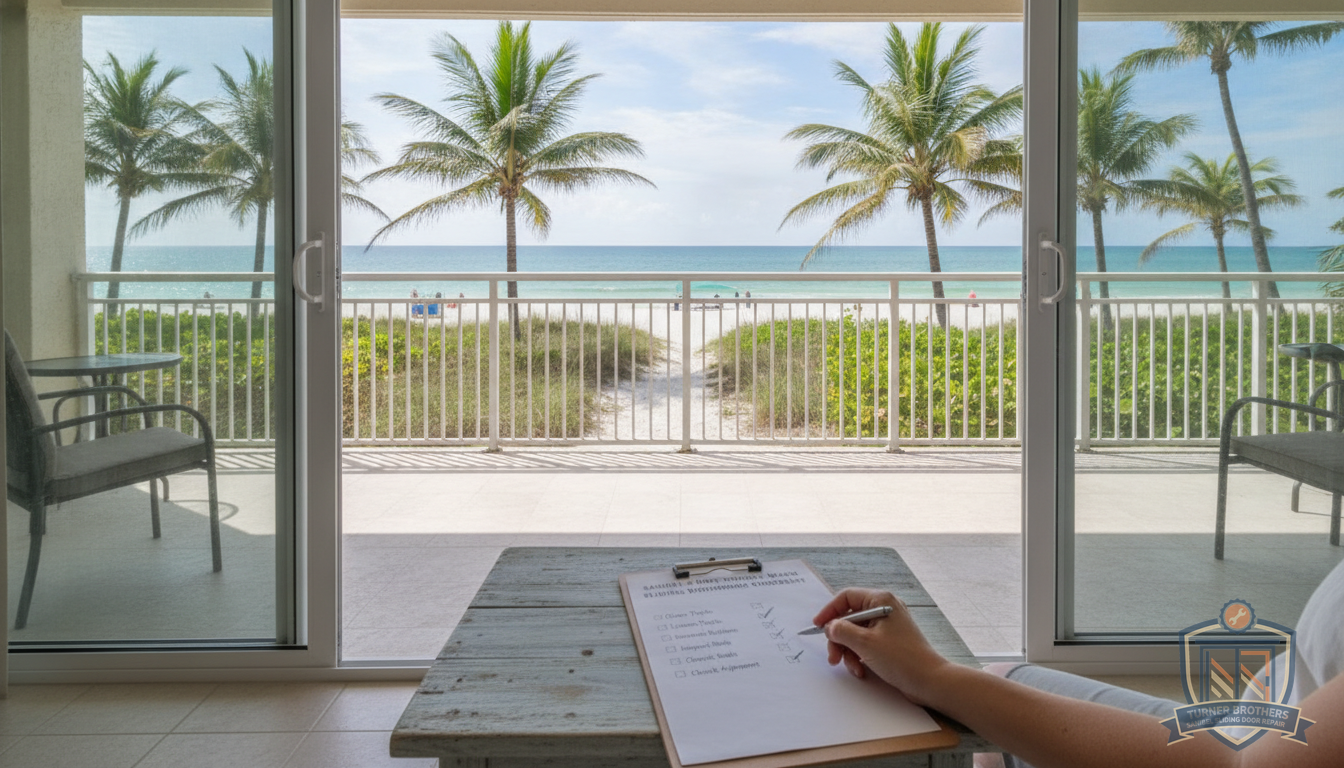
Sliding glass doors are one of the defining features of Gulf Coast living — wide panels of glass that open a Sanibel or Fort Myers Beach home to ocean breezes, natural light, and waterfront views. They are also among the most mechanically complex and environmentally stressed components in a coastal home, with moving parts that face salt air, sand, UV radiation, humidity, and storm forces that simply do not exist in most inland climates.
The good news is that a consistent maintenance routine — one that takes less than an hour and can be done twice a year — will dramatically extend the life of your sliding door hardware, reduce the likelihood of an emergency repair, and keep the door operating safely and efficiently year-round. The team at Turner Brothers Sanibel Sliding Door Repair has put together this practical checklist based on the repair calls we receive most frequently from homeowners across Sanibel, Fort Myers Beach, Cape Coral, and the surrounding communities.
When to Run Through This Checklist
We recommend completing a full sliding door inspection twice per year:
- Before hurricane season (May–June): Confirm all hardware is functional, weather seals are intact, and the locking mechanism engages fully before storm conditions arrive.
- After hurricane season (November–December): Assess any damage from storms, check for salt and debris accumulation that built up over the summer, and address wear before a door is left unattended during a winter vacancy period.
Rental property managers and owners of high-traffic vacation homes should consider quarterly checks given the accelerated wear from frequent guest use.
Step 1 — Inspect and Clean the Track
Start at the bottom. The track channel is where most sliding door problems originate. Remove any visible sand, shell grit, pet hair, or debris using a stiff nylon brush followed by a vacuum. Pay special attention to the corners of the channel where material tends to pack tightly.
After cleaning, run your finger along the inner surface of the track. You are feeling for rough spots, raised edges, corrosion pitting, and any bends or deformations in the channel walls. A smooth track should feel uniformly flat with no catches or ridges. If you detect significant roughness, visible rust pitting, or any section that appears bent out of profile, contact us about our track repair and replacement service before the condition worsens.
Lightly apply a silicone-based lubricant to the cleaned track surface — never oil-based spray, which collects sand — and wipe away any excess.
Step 2 — Test the Rollers
With the track clean, slide the door through its full range of travel slowly and deliberately. Listen and feel for:
- Grinding, rumbling, or scraping sounds at any point in the travel path
- Any point where the door catches, hesitates, or requires additional force
- Visible wobble or dipping of the panel as it moves
- A door that sits noticeably lower at one end or both ends when fully closed
Then try this quick diagnostic: lift the leading edge of the door panel slightly while sliding it. If the door moves freely with that upward pressure but drags without it, the rollers are likely worn flat or collapsed and need replacement. Our sliding door roller replacement service addresses this directly, using salt-air rated nylon and stainless-steel rollers appropriate for coastal properties.
Step 3 — Check the Lock and Handle
A sliding door that will not lock reliably is a security and safety issue — particularly important for Sanibel vacation homes and seasonal properties that may sit unoccupied for extended periods. Test the lock through its full cycle: engage the hook bolt or latch fully, confirm it seats completely into the strike plate, and release it cleanly. Red flags include:
- A handle that feels loose, spins without engaging, or requires excessive force to turn
- A latch that does not fully seat in the strike plate and can be pushed open with light pressure on the exterior
- A lock cylinder that feels stiff or requires a hard pull on the door panel to get the bolt to engage — often a sign that the door is misaligned rather than that the lock itself is faulty
- Visible corrosion or green oxidation on exposed metal surfaces of the lock hardware
Many lock issues are resolved without a full hardware replacement — lubrication and strike plate adjustment handle a significant portion of service calls. Our lock and handle repair service covers diagnosis and repair of all common failure modes.
Step 4 — Inspect the Weatherstripping
Walk the full perimeter of the closed door panel and examine the weatherstripping on all four sides. In Sanibel's climate, foam and vinyl seals begin to show meaningful degradation within a few years of installation. Look for:
- Pile or foam strips that appear compressed flat and no longer spring back when pressed
- Sections of weatherstripping that have pulled away from their channel or are peeling at the edges
- Brittle, cracked, or disintegrating material — especially on south- and west-facing doors with heavy UV exposure
- Visible daylight around any edge of the closed door panel
You can also conduct a simple paper test: place a sheet of paper between the door and frame, close the door, and try to slide the paper. If it slides with little resistance, the seal at that point is inadequate. A good seal should grip the paper firmly. Our weatherstripping replacement service restores a complete perimeter seal and reduces both air infiltration and cooling costs.
Step 5 — Examine the Glass Panel
Inspect the glass surface carefully in good light, looking for:
- Any cracks, chips, or stress fractures in the glass surface
- Persistent haze or cloudy condensation between the panes of an insulated glass unit — a sign that the IG seal has failed and moisture has entered the insulating air space
- Damaged or missing glazing tape or gaskets around the glass perimeter inside the frame
A failed insulated glass seal cannot be cleaned or repaired from the outside. The glass unit must be replaced to restore clarity and thermal performance. If your door needs new glass, our sliding glass door panel replacement service handles sourcing and installation of both standard and impact-rated laminated glass units appropriate for Sanibel's wind zone requirements.
Step 6 — Check the Screen Door
If your sliding door system includes a screen panel, give it a separate inspection:
- Roll the screen through its full travel and check for smooth movement without derailing or catching in the channel
- Inspect the mesh for tears, holes, or sections where the fiberglass has become brittle and is pulling away from the spline
- Test the screen's latch or pull handle for secure engagement
- Check the corners of the frame for broken connectors or separation
A torn or poorly fitting screen on Sanibel is not just a cosmetic issue — the island's mosquito and no-see-um population makes a functional screen door a genuine quality-of-life necessity during the warmer months. Our screen door repair and replacement service covers everything from re-screening existing frames to fabricating and installing entirely new screen panels.
Step 7 — Document and Schedule Any Needed Repairs
After completing the checklist, make a note of any issues you identified and their severity. Minor items — light lubrication, minor debris in the track — can be addressed on your own. Any issue involving roller replacement, track repair, lock hardware, weatherstripping, or glass should be handled by a professional to ensure the correct parts are used and the door is properly adjusted after service.
Turner Brothers Sanibel Sliding Door Repair serves homeowners and property managers across Sanibel and the surrounding Southwest Florida communities including Iona, McGregor, Cypress Lake, St. James City, and